Design Ops — 0→1 Enabler
Vibe Coding Workflow
Small UI bugs and polish fixes used to sit in a backlog engineering never had time for. As head of design, we built the workflow that lets designers ship those changes to production themselves, through an AI coding assistant constrained to our design system.
Background
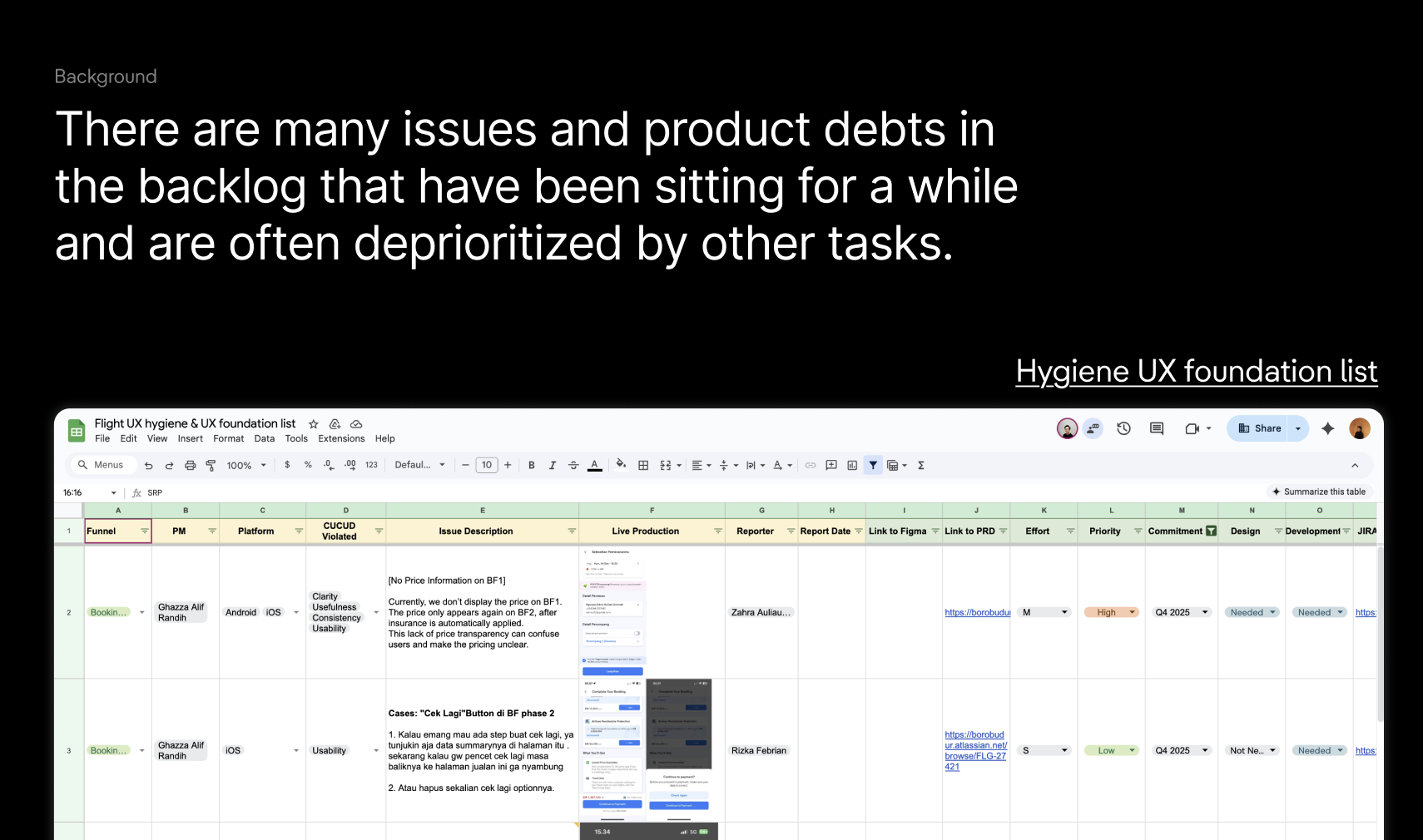
Plenty of UI issues and product debt had been sitting in the backlog for a long time — flagged, tracked, and repeatedly deprioritized against feature work. We kept a running "Hygiene UX foundation list" logging every one of them: which funnel, which platform, what CUCUD principle it violated, effort, priority, links to Figma and the PRD. The list was thorough. It just never got shorter.
Problem statementHow might we enable designers to resolve minor production issues by leveraging AI-powered tools & the right support from the developer — efficiently and safely?
This wasn't one design decision — it was a sequence of them, made with engineering, about how much trust a non-engineer could be given in a production codebase. The reasoning behind each call matters more than any single screen, so this case study logs the decisions in order instead of walking through a single flow.